
Diamond 4Cs Explained: A Simple Guide
 Diamond Tester Team ·
Understanding the Diamond 4Cs
When you’re exploring diamonds, whether for an engagement ring or another special piece, you’ll hear about the diamond 4Cs: cut, color, clarity, and carat. These factors determine a diamond’s quality and value. But which one truly makes a diamond sparkle? Let’s break down each of the 4Cs, so you can make an informed decision.
Cut: The Sparkle Maker
The cut of a diamond is often considered the most important of the 4Cs in terms of visual beauty. Why? Because a well-cut diamond reflects light beautifully, creating that signature sparkle and brilliance.
What to Look For in a Cut
- Proportions: A diamond’s proportions affect how light travels through it, impacting its sparkle. Ideal cuts are carefully proportioned to maximize light return.
- Symmetry and Polish: These are also important, contributing to a diamond’s overall appearance. Look for a stone with excellent symmetry and polish grades.
Grading
- Excellent: Reflects almost all light, offering maximum brilliance.
- Very Good: Reflects most light, slightly less sparkling than excellent.
- Good: Offers an acceptable level of brilliance, but less compared to higher grades.
Color: The Hue of Perfection
Color in diamonds refers to the absence of color. The less color a diamond has, the more valuable it is, as colorless diamonds allow more light to pass through, enhancing sparkle.
Grading Scale
- D to F: Colorless (most desirable and expensive)
- G to J: Near colorless (good value, often indistinguishable to the untrained eye)
- K to M: Noticeable color (often used in vintage settings)
Choosing the Right Color
If you’re setting your diamond in white gold or platinum, consider a colorless or near-colorless range (D-J) to avoid any noticeable tint. For yellow gold, a slightly warmer color (K-M) can be a budget-friendly choice without sacrificing beauty. Learn more about understanding the diamond color scale D to Z.
Clarity: The Inner World
Clarity measures the presence of internal inclusions or external blemishes. While it does affect value, many inclusions are microscopic and don’t impact appearance. For more details, see our guide on the diamond clarity chart.
Clarity Grades
- FL (Flawless) / IF (Internally Flawless): No inclusions visible under 10x magnification.
- VVS1 / VVS2 (Very Very Slightly Included): Minute inclusions, very hard to see.
- VS1 / VS2 (Very Slightly Included): Minor inclusions, difficult to see.
- SI1 / SI2 (Slightly Included): Noticeable inclusions under magnification, sometimes visible to the naked eye.
What to Consider
For most buyers, VS1 to SI2 provides a balance between value and beauty. Inclusions in these grades are often not visible to the naked eye and can offer significant savings.
Carat: The Weighty Matter
Carat is about the diamond’s weight, not its size, though larger diamonds tend to have higher carat weights. Carat significantly impacts price, as bigger diamonds are rarer.
What to Keep in Mind
- Budget: Consider what carat weight fits your budget, but remember that cut and setting can make a smaller diamond appear larger.
- Size vs. Quality: A well-cut diamond can appear larger than a poorly cut diamond of the same carat weight.
Which C Matters Most?
When it comes to visual impact, cut is king. A well-cut diamond can enhance the other Cs, making a lower color or clarity grade seem more appealing. However, personal preference and budget also play crucial roles.
Using Diamond Tester
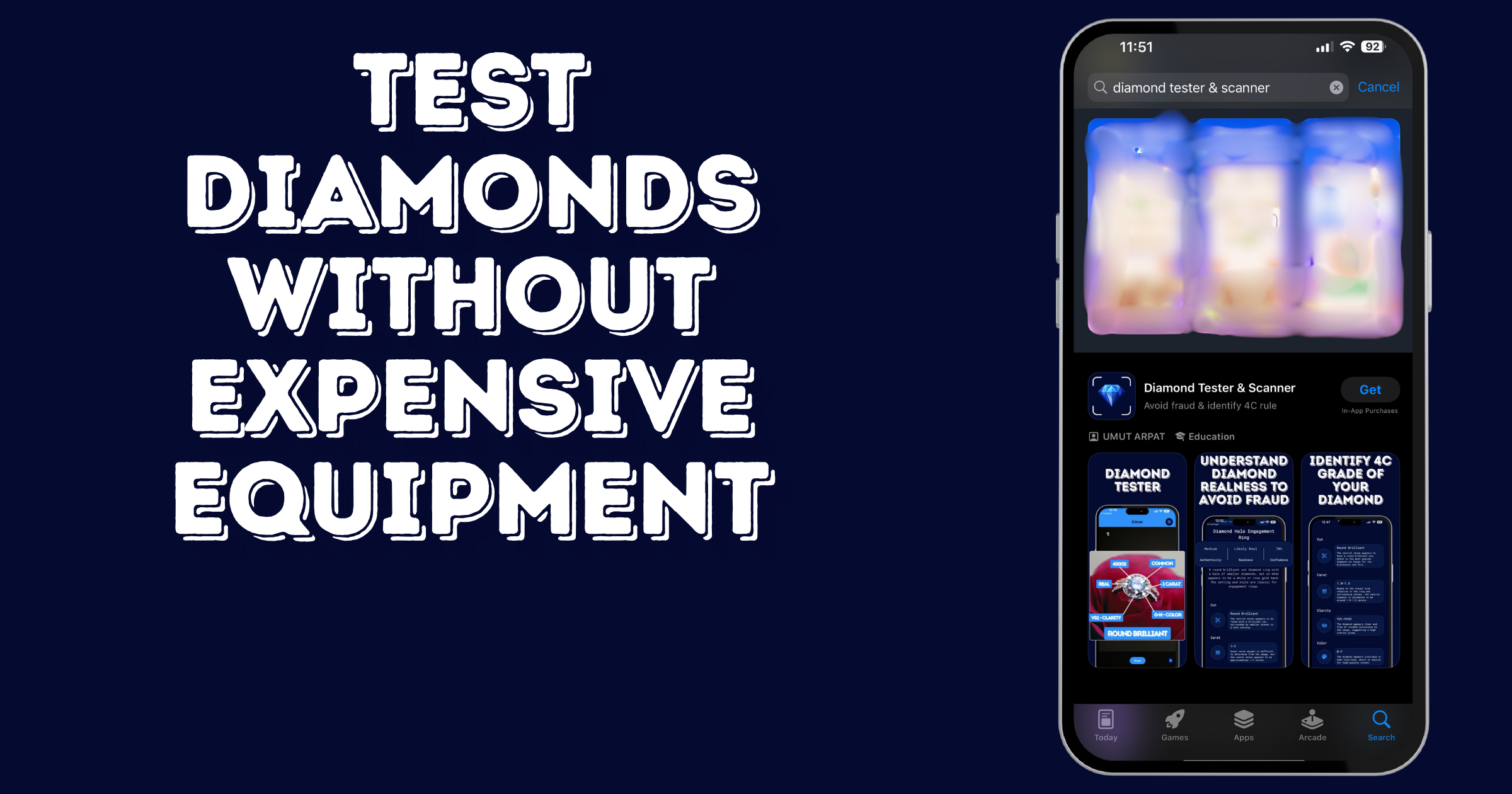
Before making a purchase or final decision, consider using Diamond Tester for a quick photo-based check. It uses AI to analyze a diamond’s appearance and give an initial estimate of the 4Cs. While this isn’t a substitute for a professional appraisal, it can be a helpful first step.
FAQ
What are the 4Cs of diamonds?
The 4Cs of diamonds are cut, color, clarity, and carat. They are the main factors that determine a diamond’s quality and value.
Which of the 4Cs is most important?
Cut is often considered the most important because it affects the diamond’s sparkle and overall visual appeal.
How does the Diamond Tester app work?
Diamond Tester uses AI to analyze a photo of a diamond, estimating the likelihood of it being a real diamond and providing a rough estimate of its 4Cs.
Can I use the 4Cs to appraise my own diamond?
While understanding the 4Cs is helpful, professional appraisal is recommended for accurate valuation, especially for buying, selling, or insuring.