
How to Tell If a Diamond Is Real: Key At-Home Tests
 Diamond Tester Team ·
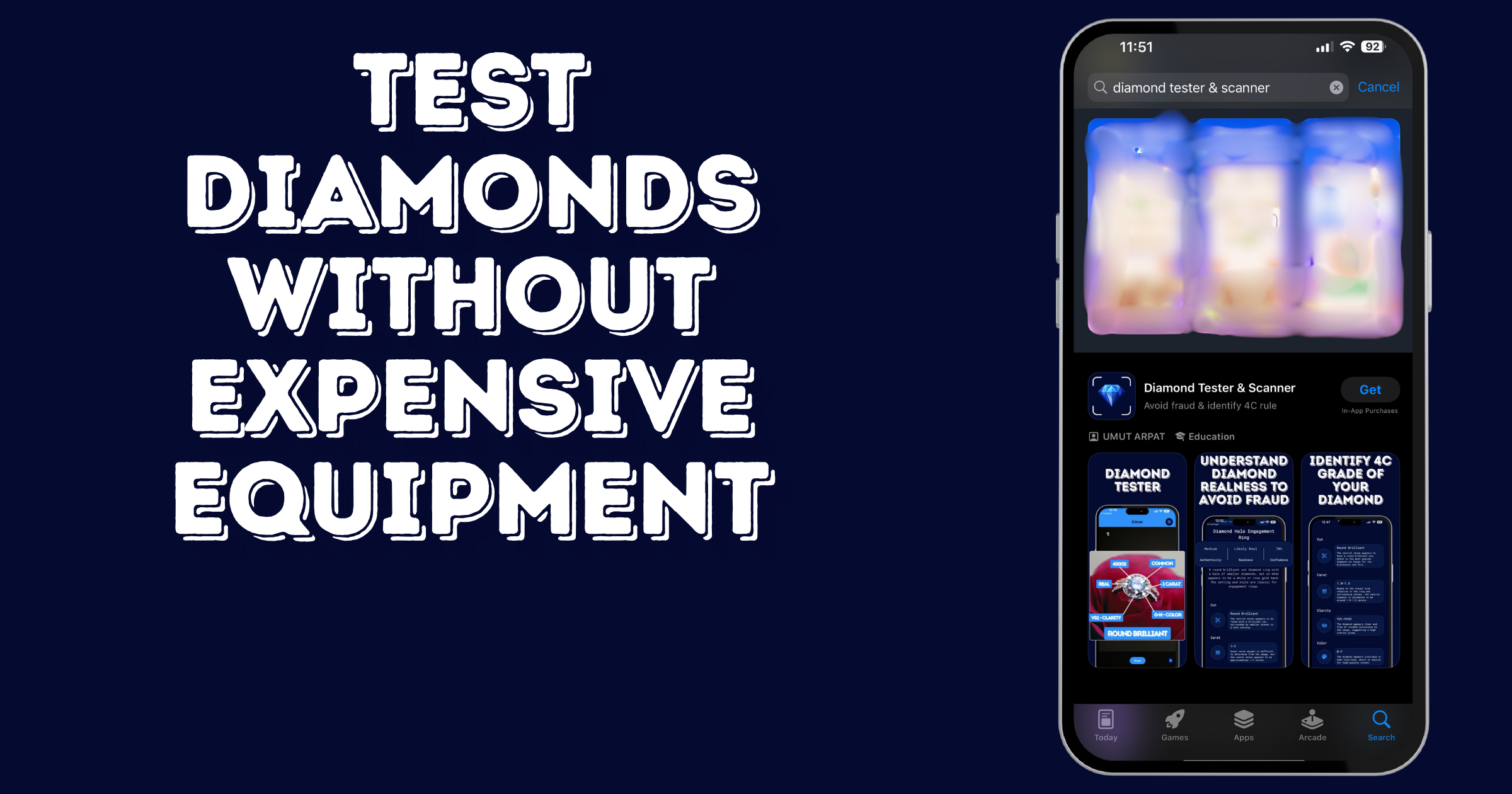
Understanding how to tell if a diamond is real can save you time, money, and heartache. While professional evaluation is unbeatable, some at-home tests can offer initial insights. Let’s explore these methods, what they catch, and when it’s wise to consult a jeweler or a gemologist. For more on choosing the right tool, see our guide on best diamond testing tools.
Basic At-Home Diamond Tests
Fog Test
The fog test is a quick way to differentiate diamonds from some simulants. Simply breathe on the stone, creating a light fog. Real diamonds disperse heat rapidly, so the fog should clear up almost instantly. However, this test isn’t foolproof. Moissanite and some synthetic gems may also pass.
Water Test
The water test is another straightforward check. Fill a glass with water and drop the loose stone in. Real diamonds are dense and will sink. If your stone floats, it’s likely a fake. Note that this test doesn’t work well with mounted stones and won’t catch denser simulants like moissanite.
UV Light Test
Under a UV light, many diamonds will exhibit fluorescence, often a blue glow. This can be a clue, but not definitive proof. Not all diamonds fluoresce, and some simulants might exhibit similar effects. It’s a quick check, but not a standalone verifier. For more on simulants, explore the differences between cubic zirconia and diamonds.
Dot Test
Place your stone over a dot drawn on a piece of paper. Real diamonds have high refractive properties, making the dot disappear or appear distorted. This test is less effective for mounted stones and can be fooled by other high-refractive gems.
Thermal Conductivity Test
Diamonds are excellent conductors of heat. Thermal testers can distinguish diamonds from simulants like cubic zirconia and glass. However, moissanite is a similar conductor and can pass this test. For a quick check before a purchase, consider using Diamond Tester, which uses AI to analyze a photo and estimate if a stone is likely a real diamond.
Tests to Avoid
Scratch Test
Some suggest scratching glass to test a diamond’s hardness. This is risky and can damage your stone or setting. The potential damage outweighs any benefit.
Heat Test
Heating a diamond and dropping it into cold water can cause it to shatter. This test is dangerous for your stone and should be avoided.
When to Visit a Jeweler
While these tests can be helpful, they’re not conclusive. For buying, selling, insuring, or estate matters, consult a professional. Independent appraisers and grading labs like GIA or IGI provide reliable analyses.
FAQ
What is the best at-home test to tell if a diamond is real?
The thermal conductivity test is quite effective for catching some simulants, but keep in mind that moissanite can pass this test. For a quick AI opinion, you might try Diamond Tester.
Can a jeweler tell if a diamond is real?
Yes, a jeweler with the right tools can often determine if a diamond is real. For formal purposes, a grading lab report is recommended.
How accurate is the fog test?
The fog test is simple and quick, but not definitive. Some simulants like moissanite may also pass the fog test.
Are lab-grown diamonds real?
Yes, lab-grown diamonds are chemically and structurally identical to mined diamonds. They’re real diamonds, unlike simulants such as cubic zirconia or moissanite.