
Diamond Checker Tools: A Practical Guide
 Diamond Tester Team ·
When you’re trying to figure out if that sparkling stone in your hand is the real deal, using a diamond checker tool can be a lifesaver. From loupes to lab equipment, each tool has its own strengths and limitations. Let’s dive into what each option can do for you.
The Loupe: A Jeweler’s Classic
The loupe is a small magnifying glass used by jewelers to examine the intricate details of a diamond. Here’s how to use it effectively:
- Choose the Right Loupe: A 10x magnification is standard for diamonds.
- Find a Good Light Source: Natural light is best.
- Examine the Stone: Look for inclusions or blemishes that affect clarity.
Pros:
- Great for spotting inclusions and surface blemishes.
- Portable and easy to use.
Cons:
- Requires practice to use effectively.
- Doesn’t determine if a diamond is real or synthetic.
Thermal Testers: Quick and Simple
Thermal testers measure heat conductivity, a property that diamonds excel at. However, they can be fooled by some simulants like moissanite. Steps to use a thermal tester:
- Turn On the Device: Allow it to warm up.
- Touch the Probe to the Stone: The device will indicate if it is a diamond.
Pros:
- Quick and easy to use.
- Effective for identifying some fakes.
Cons:
- Moissanite can pass as a diamond.
- Not foolproof against all simulants.
Multi-Testers: Combining Technologies
Multi-testers combine thermal and electrical conductivity tests, giving a more rounded assessment. Using a multi-tester:
- Prepare the Tester: Calibrate as per instructions.
- Test the Diamond: Follow prompts for results.
Pros:
- More reliable than single-function testers.
- Can differentiate between diamond and moissanite.
Cons:
- More expensive.
- May require periodic recalibration.
UV Light: A Different View
UV light can reveal fluorescence, which is characteristic of some diamonds. How to use UV light:
- Darken the Room: Use a UV flashlight on the stone.
- Observe the Reaction: Look for a blue glow, indicating fluorescence.
Pros:
- Useful for identifying specific diamond characteristics.
Cons:
- Not indicative of authenticity.
- Some high-quality diamonds may not fluoresce.
Phone Apps: Fast and Convenient
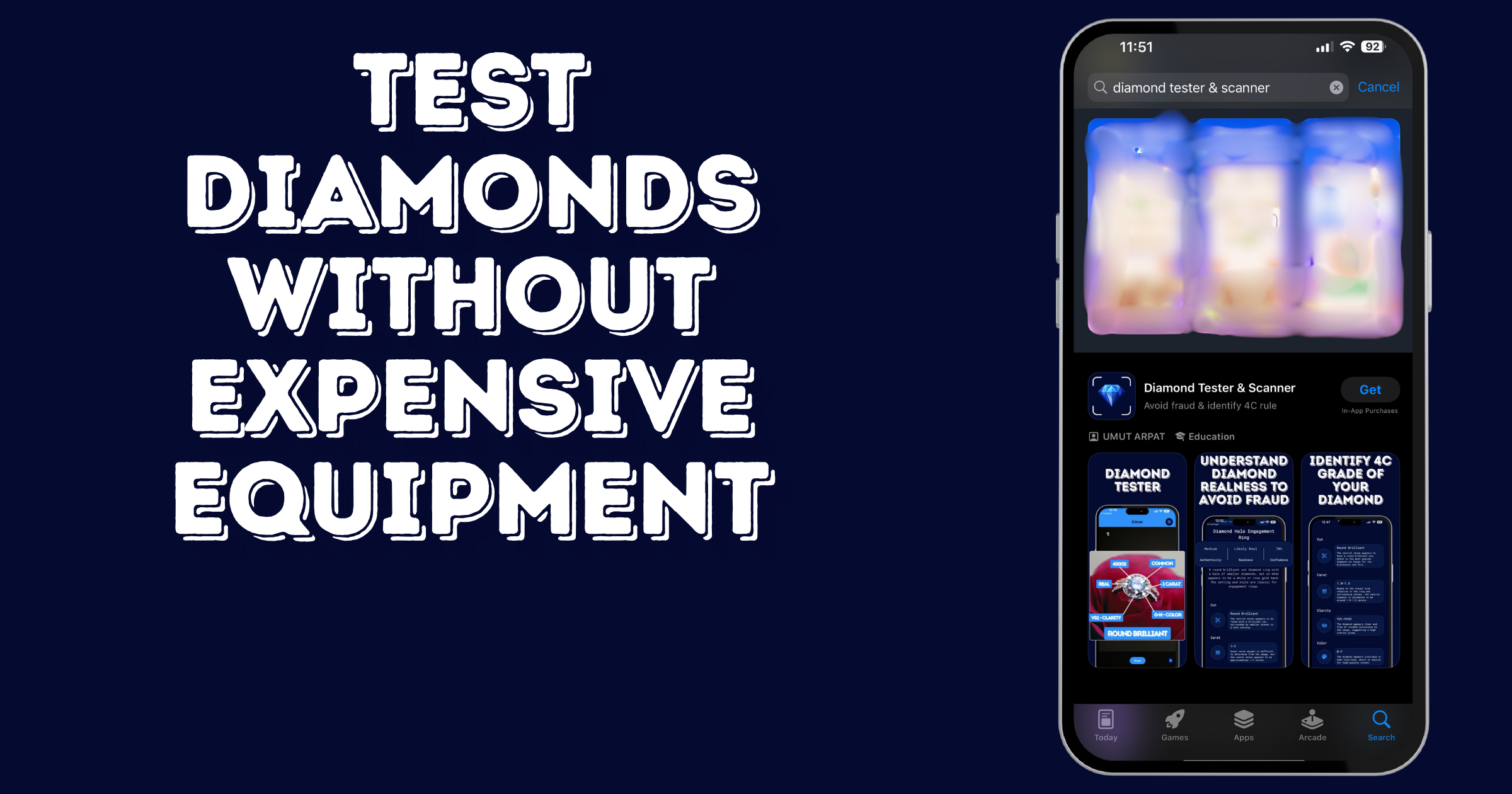
Apps like Diamond Tester use AI to analyze photos of stones. Here’s how it works:
- Download the App: Available on iOS.
- Capture a Clear Photo: Follow app guidance.
- Review the AI Estimate: Get insights into likelihood of authenticity and 4C grading. Learn more about the diamond 4Cs: cut, color, clarity, and carat.
Pros:
- Convenient, especially for a first check.
- Provides a rough estimate of stone value.
Cons:
- Not a replacement for professional appraisal.
- Relies on photo quality.
Lab Equipment: The Gold Standard
For definitive analysis, nothing beats professional lab equipment.
- Find a Reputable Lab: GIA, IGI, or similar.
- Send in Your Stone: Follow lab procedures.
- Receive a Report: Detailed and certified.
Pros:
- Most accurate assessment.
- Provides official documentation.
Cons:
- Expensive and time-consuming.
- Not suitable for quick checks.
FAQ
How accurate are diamond checker tools?
Most tools offer a preliminary check and are highly useful, but they can’t replace a professional gemologist’s assessment.
Can I rely on a diamond app for buying decisions?
Apps like Diamond Tester are great for initial checks, but consult a professional for significant purchases.
What is the best tool for identifying moissanite?
A multi-tester can differentiate moissanite from diamonds better than a single-function thermal tester.
Are thermal testers reliable for all diamond types?
They can identify many diamonds, but struggle with simulants like moissanite. Always use in combination with other tests.